
Preparing the Barrel

When I received the barrel it came with simple instructions: “Fill the barrel with boiling water for three hours, drain, and fill with beer.” That was easier said than done. I added water and watched it drain out all over my garage floor.
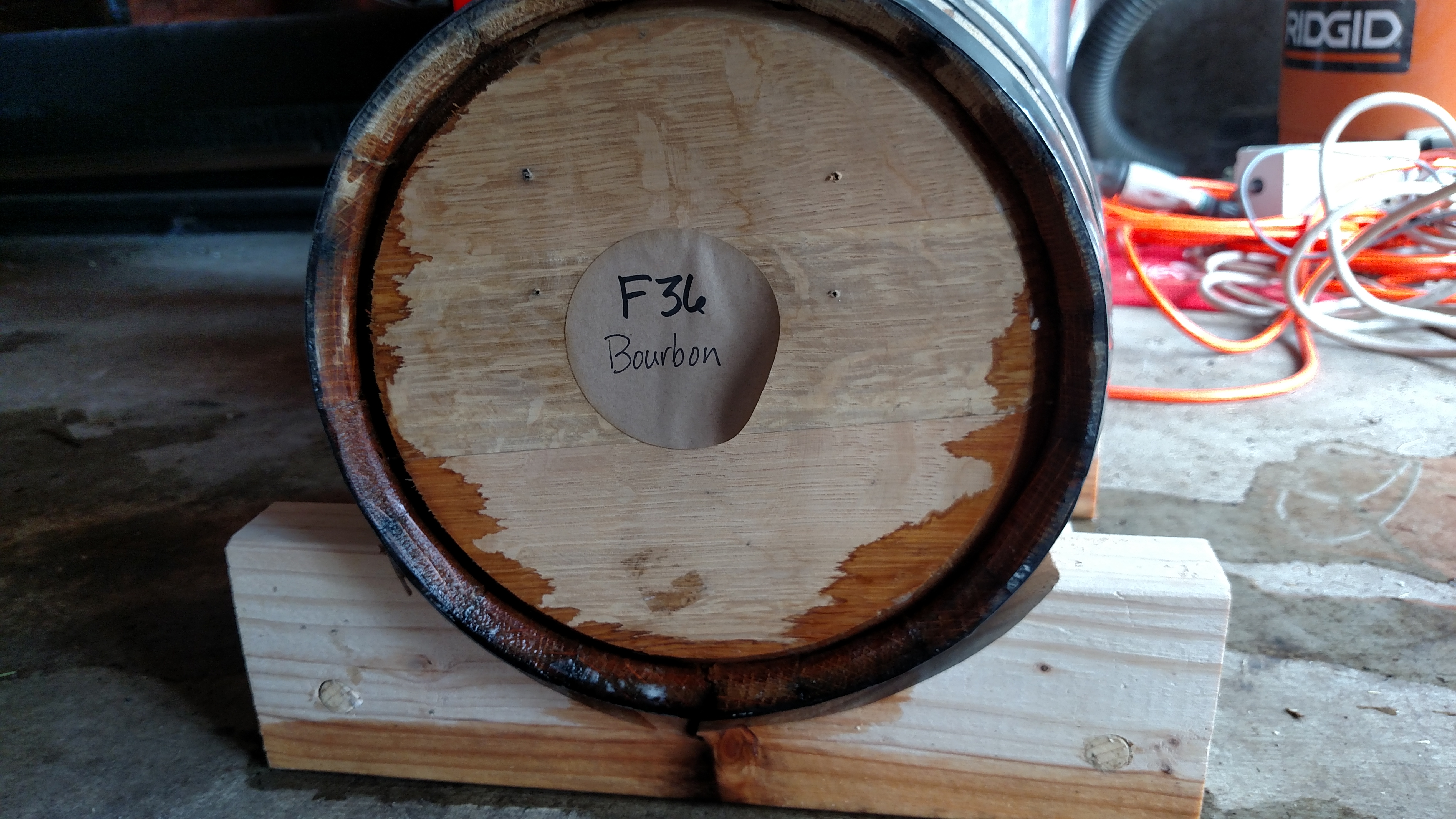
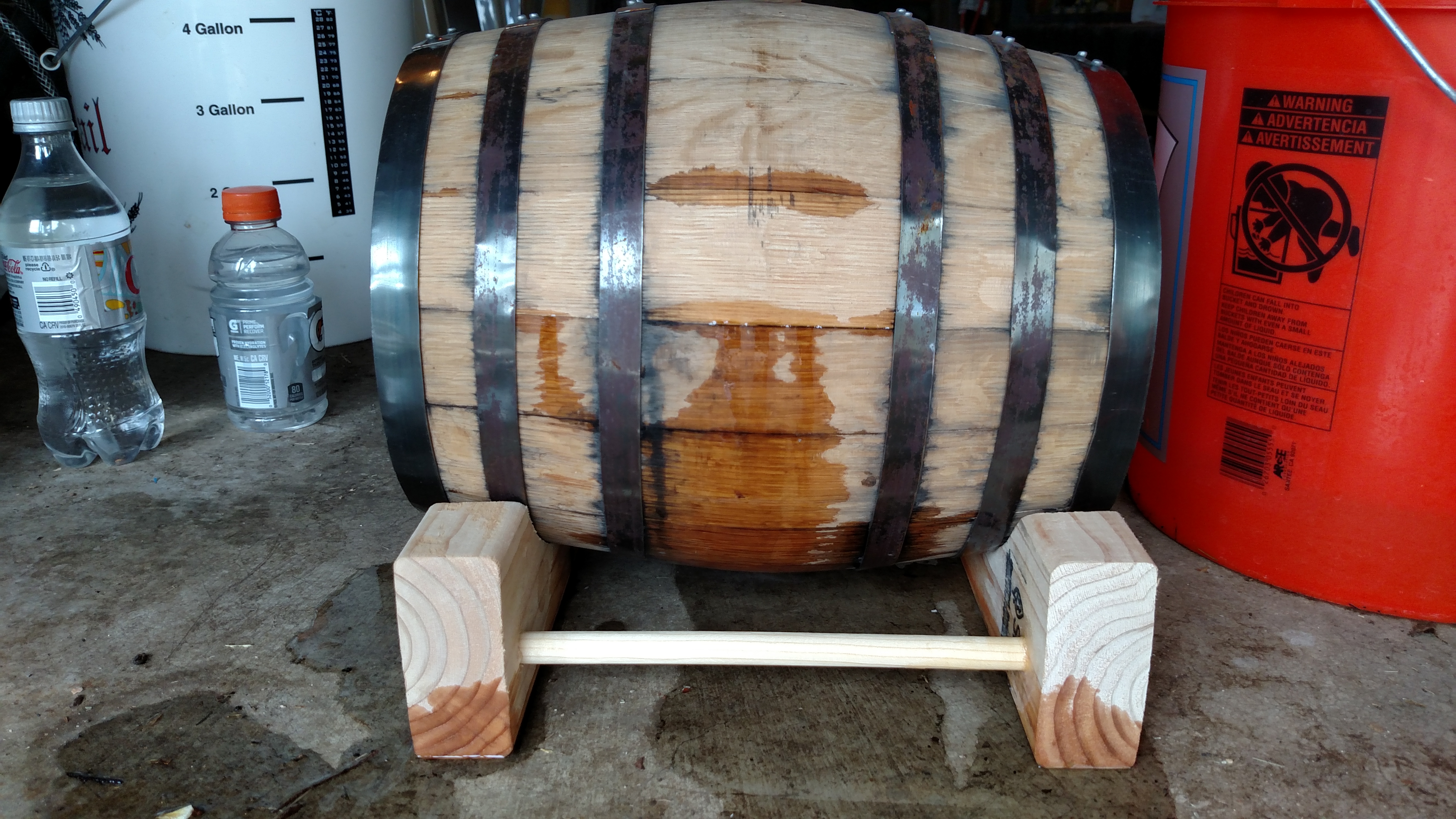
leaky_head leaky_barrel

I received the barrel 4 months before I was able to fill it.  Plenty of time for the staves to dry out. That doesn’t include how long it was empty prior to the barrel being sold. So now I have a dry leaky barrel that can’t fill with beer.

So I decided to try to force the barrel to be filled. The hot water should swell the staves. I boiled water and continued to attempt to fill the barrel to the top. The leaking continually slowed but did not stop over the following 24 hours. I was topping off the barrel at least every 2-3 hours except overnight.

The other thing I was trying was tapping on problem staves with a mallet. This was another solution that the internets taught me. How well this worked is unknown. But it did help me feel better as I smacked the barrel that would not let me put beer in it. I was nervous about hitting it too hard so I’m not sure if I did any real good with the mallet.

So I’m 24 hours in to trying to fill the barrel and I can’t stop the leak. The internet has not been helpful and I’m reduced to putting random words together that are related to barrels to try to find something to help me stop the leak. Finally I came across an article from WineMaker magazine. It contained tips for new barrels and used barrels and at least gave me something new to try.

The new technique consisted of filling the barrel about 20% full with hot, steamy water, shaking the barrel to get the steam to penetrate the staves, and setting the barrel on its end to swell the head of the barrel. Repeat for the other barrel head. If that doesn’t work then soak the barrel.

I was already soaking the barrel with only limited success so it seemed foolish not to try it. Before I could do this I needed to empty the barrel. The leak was slowing at this point so the barrel still contained about 2 gallons of water. As I emptied the barrel my garage immediately smelled like bourbon. All of this soaking was stripping the barrel of some of its bourbon character.

Thankfully this new technique finally sealed the barrel. I tested it again by filling it with water. Finally I could drain the barrel and fill it with beer! I had the Russian imperial stout ready in a keg and used my Blichmann beer gun to fill the barrel gently. Being in the barrel would introduce enough oxygen. I wanted to add the beer gently so I did not make the oxygen impact more dramatic.

filling_barrel

So if I had to do it over again I would do the following for barrel prep:

  1. Partial fill with hot, steamy water. Shake the barrel. Set on barrel head. Repeat for opposite head.
  2. Overnight soak with hot water if needed.
  3. For obvious gaps or large leaks in the staves try tapping the staves or bands with a rubber mallet.

Now the wait has begun. I lost some of my barrel character through long hot water soaks, but I’m confident that I will still end up with a delicious beer. If anything this may have made the barrel aging process less stressful. I was worried that with the small barrel size it could impart too quickly and become overbearing. After this ordeal I am going to relax and enjoy what the barrel brings.
How to Build a Barrel Stand

My wife surprised me with a 2.5-gallon barrel for my birthday. I have never had a barrel before so my mind started racing with all kinds of questions. How do I clean it? Will it leak? Do I have beer to put in it? What beer should I brew for it? How long should the beer be in the barrel? How many times could I use it before making it a sour barrel?

At some point I hit the question I needed to solve first: how is the barrel going to stay upright? I need some kind of stand.

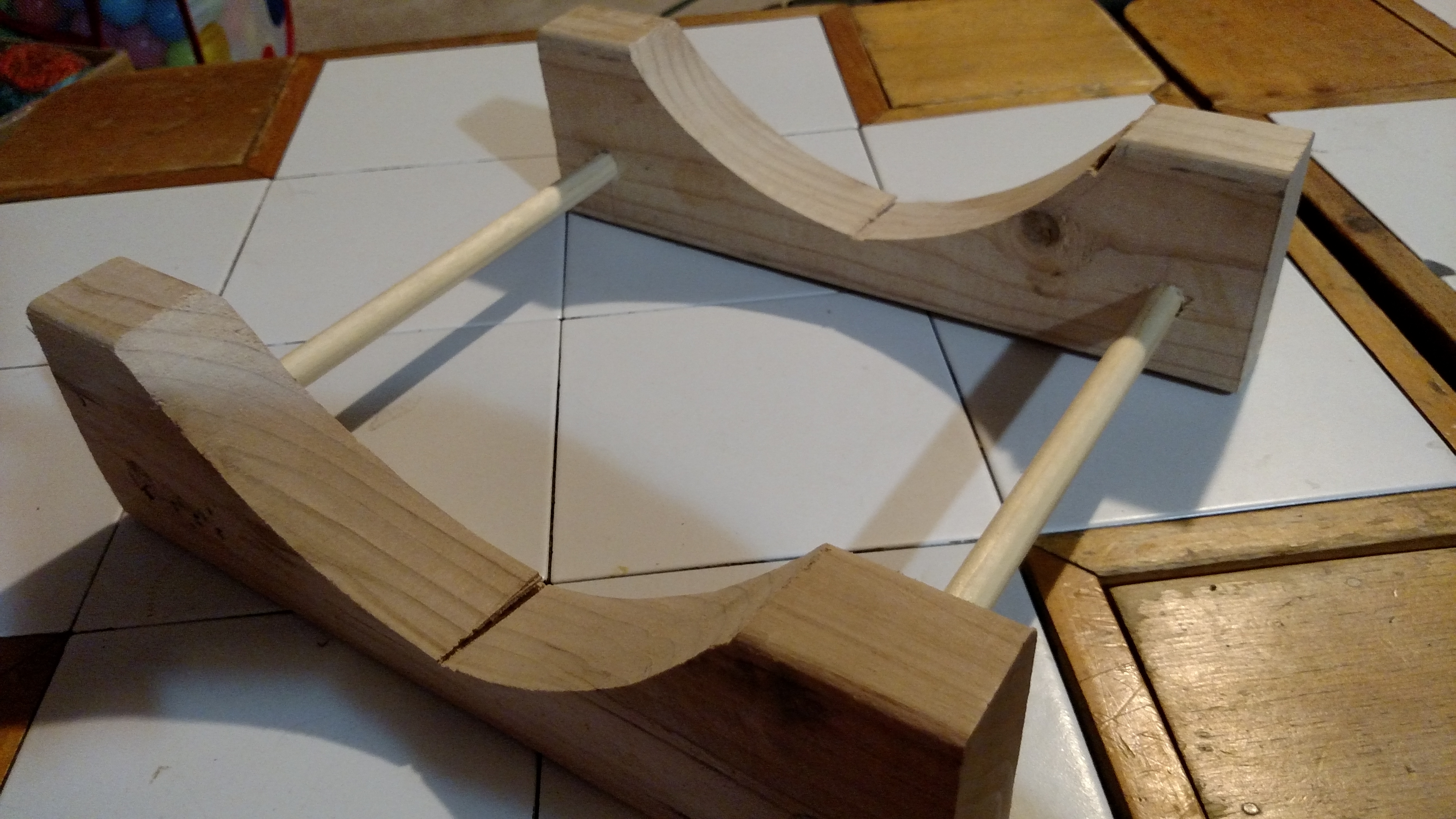
I wanted something simple and hopefully put together from scrap in my garage. The 2.5-gallon barrel is only about 1 foot long and 8 inches in diameter. A couple pieces of 2×4 and a wooden dowel should do the trick. I planned for the stand to be about 11 inches long and for about 1/3 of the barrel to sit in the stand.

Barrel Stand

I cut the 2×4 and dowel to length. I cut out a profile of the barrel in the 2×4 with exquisite craftsmanship, as seen in the above photo. I clamped the two sides together to drill the holes for the 1/2″ dowel. I wanted to make sure they were even. Once everything was cut I applied some wood glue to the dowels and hammered them in with a rubber mallet.

Barrel on the Stand

The stand is solid and does its job. Thankfully the barrel covers up most of my crappy workmanship. I brewed a Russian imperial stout to be the first beer in the barrel. I will go in the barrel early next week. If the first round goes well I’ll run the rest of the batch through the barrel. Then I need to figure out what is next! Now to prep the barrel…

Chilling the Conical Fermenter

A good fermentation is critical in brewing. Temperature control is a huge part of that. When I got my conical fermenter I needed to figure out a new temperature control method. What I had for my plastic carboys is not large enough to accommodate the conical. So far I have my heating method figured out. Until now I did not need a chilling method. The ambient temperatures over winter were only required heating.

The last couple weeks have accelerated my need for a chilling solution. The outside temperatures have hit the mid 80s earlier than normal and that caused the fermenter in the garage to reach as high as 72 degrees with 5 gallons of beer inside (at least the times I was able to check it). Thankfully the beer still in the conical was just resting on some coffee beans. No harm done.

If I could set up the perfect chilling system, I would have a small glycol chiller in my garage. It would be efficient, I wouldn’t have to change ice bottles, or move the conical in and out of a chamber. Plus it would just be really cool. However, I just spent my money on a conical and a glycol unit is not cheap so that’s not going to happen.

So where does that leave me? The way I see it there are 4 paths forward:

  • DIY glycol chiller
  • Fermentation Chamber
  • Cooler and a pump to circulate chilled water
  • Only brew in the winter

Let’s look at these from worst to the winner. Clearly I’m not going to only brew in the winter. That was a dumb idea. Next.

The fermentation chamber is what I had before I got the conical. It worked really well and the reason I’m not using it now is the conical doesn’t fit. I would need to build a new chamber or buy an upright freezer/fridge to do the job. There are logistical issues to this as well. The conical with 10 gallons of beer is heavy and the only spot to put a chamber is on the opposite side of my garage. So it would require a lot of moving the conical around or pumping long distance. The logistics plus the fact that I would be buying a lot of items that could not transfer to a glycol solution later on takes this option off the table.

The DIY glycol option seems like the logical move from an actual glycol chiller. It would involve partially disassembling an air conditioner to chill glycol in a cooler. The glycol would then be pumped through the coil inside the conical. I strongly considered this option, but if the ultimate goal of the chiller is to get to the glycol chiller than I need to save money. The air conditioner is an added expense that would not translate to the glycol solution and would not be reusable after being torn apart for this use.

That leaves the cooler and chilled water option. This is essentially the DIY glycol solution but sub ice packs for the air conditioner and water for the glycol. The big point of this solution is its cheap and can be repurposed. I got all of the pieces for this for about $40. I can reuse the pump and tubing with the glycol solution and I can use the cooler for its intended purpose when I’m done with it. That lets me work towards the glycol chiller with minimal waste. The big downside of this solution is the large increase in labor. I’ll have to keep swapping ice packs to keep the water cold.

Parts List

Assembly

  1. Drill 1/2″ holes in the cooler. Drill pilot holes from the inside of the cooler. I used the grooves in the lid to align the holes with a thin portion of the lid.
    Cooler_holes
  2. Cut tubing to length
  3. Attach return hose to the bottom barb of the chilling coil and secure with clamp.
  4. Attach hose to the pump and secure with clamp.
    Inside Setup
  5. Feed hose through cooler and attach to the top barb of the chilling coil. Secure with clamp.
    Outside Setup
  6. Drink a beer

Chilling the Conical

The assembly was easy and the use is even easier. Just fill with cold water and ice packs, plug it in to a temperature controller and watch the conical stay cool. Ice packs will need to be swapped out as the chilling water warms. The power cord for the pump is small enough that it can close in the lid without additional modification.

Unfortunately I have not been able to test the cooling efficiency of this setup yet. I confirmed that the pump is strong enough to move the water through the coil. The pump is running in the above picture of the inside of the cooler. It is providing a decent flow. The question now is how fast it can chill and how often the ice packs need to be swapped out. A move might need to be made to a bigger cooler for a larger thermal mass of cooling water.

I’ll have an update on how this works. I have a batch ready to go for this weekend, but the heat has subsided so I may not be able to test out the chilling system too well. The heat will return and then I’ll be able to really put it through its paces.

UPDATE: Although the ambient temperature dropped significantly, I was able to test the chilling setup when my hop screen clogged and I was forced to pour the last 2 gallons hot into the conical. After the wort temperature stabilized at 80 degrees, I filled the cooler with water and a couple ice packs and hooked it up to the temperature controller. It dropped the conical by 4 degrees in about 30 minutes. It was getting late and I needed some rest so I called it a night.

In the morning the wort was still at 72 degrees. I dropped a couple new ice packs in and it took the temp down the rest of the way pretty quickly (I forgot to time it this time). I still need to figure out how the system does managing the temperature. I hopefully won’t need to use it to drop the temperature in this fashion very often.

Conical Fermenter Clean in Place Solution

One of the benefits of a conical fermenter is easy access to the interior of the vessel for cleaning, and, unlike a plastic bucket, the steel does not scratch easily. While the ability to apply a little elbow grease is nice, I’m lazy and want to just let the conical clean itself. Having a clean in place (CIP) solution was one of the first things I looked into when I decided to buy a conical fermenter.

SS Brewtech has a suggestion for a CIP build. I started with this as a base and made a couple changes. First, I set it up to use quick disconnects so I could leverage the hoses I already have built for my brew system. Second, I modified the outlet. SS Brewtech recommends using 3/4 inch hose on the outlet to get enough drainage. When I made my first attempt at the CIP solution, I used 1/2 inch hose on the outlet because that’s what I could set up with what I had on hand. Why buy more if I don’t have to? I had to.

half_inch_hoseAs seen in the picture above, the cleaning solution could not drain fast enough and solution was draining out of the racking arm. The pump would drain the cleaning solution reservoir in about 20 seconds. Making a switch to the 3/4 inch fitting a hose would be a purchase for something I would not use at all in the rest of my brewing setup. Part of my new mentality in the brewery is having compatibility and spares throughout my system. Instead of a 3/4 inch tri-clover fitting and hose I am using a 1.5 inch tri-clover elbow. It drains beautifully and I also use it on the outlet of the conical.

Parts List

  • Submersible Pump (Amazon)
  • CIP Spray Ball
  • Garden Hose to 1/2″ FPT Adapter (MoreBeer)
  • 1/2″ MPT to Male Quick Disconnect (MoreBeer)
  • 1/2″ FPT to Male Quick Disconnect (MoreBeer)
  • 1.5″ tri-clamp 90 degree elbow (MoreBeer)
  • 1.5″ tri-clamp gasket (MoreBeer)
  • 1.5″ tri-clamp (MoreBeer)
  • 5 gallon bucket
  • Teflon tape

As noted above, this setup was designed to work with the hoses that I already use with my brew system. You can set up a hose like this with:

Assembly

  1. Attach the hose to 1/2″ FPT adapter to the pump. For all of these fittings, use a few wraps of Teflon tape to ensure no leaks occur during use.
  2. Attach the 1/2″ MPT to male quick disconnect to the hose adapter.Pump_w_quick_dis
  3. Attach the 1/2 inch FPT male quick disconnect to the tri-clover lid.
  4. Attach the CIP fitting to the tri-clover lid.3_in_tri_cip
  5. Drink a beer!

Clean in Place

Now that everything is assembled it is time to clean! Everyone’s favorite activity. After my first use of the conical I had some build up from the yeast krausen. Everything else had rinsed out nicely with the hose.

pre_cleanSetup and the actual cleaning is very easy. Attach the elbow to the lower outlet of the conical. Install the CIP fitting in the lid and clamp the lid down. Fill the bucket with 2 gallons of cleaning solution. I use PBW and heat it to between 130 and 150 degrees before adding it to the bucket. Hook up the hose to the pump and CIP fitting and place the pump in the bucket. Open the lower valve and the racking cane valve (to allow extra venting). Plug in the pump and let the PBW do its thing!

tri_elbow_installedThe leg extensions from SS Brewtech make this very simple. The height of the lower port is just above the top of a 5 gallon bucket. The extensions are not necessary though. You could easily just lift the conical onto something to get the right height. I did have an issue with the tubing kinking at the top. I ended up running it through the handle on the side of the conical to give it some support.

final_buildThe elbow on the outlet worked wonderfully draining back into the bucket. With the elbow I’m not sure it’s necessary to open the racking cane as SS Brewtech suggests, but it doesn’t hurt anything to have it open so I figure better safe than sorry.

post_cleanI let the pump run for about 1.5-2 hours while I took care of some other things around the house. After it was done, I filled the bucket with hot water and turned the pump back on to let it rinse out the conical for a few minutes. It cleaned very well. Happy with the set up.


How To: Store Malt in Bulk

Earlier this year I wrote about the power of buying in bulk. That post was focused on my bulk hop purchase, but also discussed the important factors for storing malt in bulk. Storing malt generally requires a low-humidity environment around room temperature in an air tight container. The caveat with storing anything in bulk is the need to use it in a timely fashion. So storing base malt in bulk is really the only legitimate option for homebrewers since we have to buy 50+ pounds at a time.

I was finally pushed over the edge for buying malt in bulk while planning a 10-gallon batch of IPA. At my local shop, the cost for 22-pounds of grain is close to the cost of a sack of the pale malt I generally use. So for about $5 more than I would have been spending I took home an additional 33-pounds of grain. Sounds like a pretty good deal to me.

So now how do I take proper care of my new found riches of grain? I decided to use buckets and Gamma Seal Lids. These screw-on lids are made of food safe plastic and snap on to buckets. They say the lid can work on 3.5-gallon to 7-gallon buckets. ;In keeping with the food safe theme, I used 6-gallon fermentation buckets. Two 6-gallon buckets held 55-pounds of grain with ease.

Gamma_Lid_Buckets

The Gamma lid does mention a rubber mallet might be needed to get the lid to snap onto the bucket. I found that by removing the screw-on top the ring snapped easily on the rim of the bucket without the mallet. It was more difficult to attach with the screw-on top in place.

Overall, I’m very happy so far with this solution.The buckets are easy to store and the lids make them air-tight and very accessible. The best part of it all is the savings from buying one sack of grain paid for the buckets and lids. From now on I will continue to save money on base grain!

How To: Adjust the Mill Gap of a Barley Crusher

Part of being an engineer is wanting as much data as possible to enter into spreadsheets that spawn into other spreadsheets. Another part is wanting to control as many variables as possible. The more you can control, the more repeatable your process is and the more you can understand what will happen when you change a variable. So after I made the jump to brewing all-grain it wasn’t long before I wanted my own mill.

After doing some research I bought a Barley Crusher. I’ve been very happy with the mill (especially once I stopped hand cranking), but now that I own this part of the process I also have to take ownership of the maintenance. The gap between the mill rollers can change over time. Maintaining the proper gap is crucial to consistent and efficient brewing.

The gap controls the crush of the grain. A small gap produces more grain flour which increases both the efficiency and the risk of a stuck sparge. A large gap leaves larger pieces of grain husk which helps with mash runoff but leaves more of the endosperm in tact which lowers efficiency. Therefore, brewers must find a balance to break the endosperm down enough while leaving the grain husk intact enough to efficiently lauter. A common mill gap setting for homebrewers is 0.038 inches. My system recirculates the mash and in order to make sure my mash doesn’t stick or channel I use a gap of 0.045 inches.

In order to measure and set a gap that small you will want to use a feeler gauge. A feeler gauge is made up of a number of metal blades of varying thickness. By isolating multiple blades you can create different thicknesses. To test my mill gap I put the 0.022 and 0.023 inch blades together. If you are unwilling to spend the $5 for a feeler gauge I’ve read you could use a credit card to get close to a 0.038 inch gap. However, keep in mind the mill rollers will scratch whatever you use to set the gap so use a the credit card that your significant other uses way too often.

Feeler Gauge

When you are ready to set the gap it is very easy to adjust the position of the rollers for the Barley Crusher. First, loosen the two screws on the back of the mill with a phillips head screwdriver. It will only take about a quarter turn on these screws to free the rollers. After loosening the screws, just turn the knobs on either side of the mill to adjust each side of the roller gap.

Mill ScrewsPut the feeler gauge into the gap as you adjust the knobs. You want the feeler gauge to not be stuck in the mill, but also not be completely loose. The gauge should fit in the gap with some slight resistance, but you should not have to force it. Be sure to set the gap on each end of the rollers and the center. If you only set the gap on one side or in the middle, you could have an uneven gap with one side larger than the other. This would result in some grain passing through the mill relatively unscathed and some being pulverized to powder. The whole idea of setting the mill is to get a nice consistent crush.

Now your Barley Crusher is adjusted and set for your desired crush! My starting gravity issue disappeared on the brew day following my mill adjustment. It could have been complete coincidence, but it is one less thing I need to worry about. Setting the mill is another step in taking complete ownership of the brew day.

How To: Brew Beer Using Extract

Brewing beer is simple. When people ask me how hard it is I tell them that if you can boil water, you can make beer. Sure there is a little more that goes into it, but not so much that it should be intimidating. Most brewers start out brewing malt extract. Malt extract is a condensed form of the sugars used in brewing. It comes in both liquid and dry forms. Using extract simplifies the brewing process because someone has already done part of the job for you: getting the sugar out of the malt. We will use a simple pale ale recipe as an example for this process. The general process is the same for any beer.

Be sure to read through the steps a couple times before you start your brew day. That way you won’t be surprised by anything you need to do.

Easy Drinking Pale Ale
8 lb gold liquid malt extract
1 oz Cascade hops (6% AA) 60 min
1 oz Cascade hops (6% AA) 20 min
1 oz Cascade hops (6% AA) 0 min
1 packet US-05 dry yeast

Brewing Process:

  1. Clean and sanitize your equipment. Follow the instructions on your sanitizer to mix a solution to the proper concentration.
  2. Heat 3.5 gallons of water to boil in a 5 gallon kettle.
  3. When the water is boiling, turn off the heat and stir in the malt extract. Stir well to avoid the extract dropping to the bottom of the kettle where it could burn.
  4. Turn on the heat and return the wort to a boil.
  5. When the wort starts boiling again, add your 60 minute hop addition (1 oz of Cascade hops) and start a timer for 60 minutes. The time next to the hops is the amount of time they spend in the boiling wort.  It is possible that the wort will foam up and boil over the side of the kettle within the next 10 minutes or so.  If the beer starts to foam up turn the heat down and stir until it subsides. You really want to pay attention to your kettle during this time. Cleaning up a boil over is not fun and a quick way to get kicked out of the kitchen when brewing beer.
  6. Continue your boil and add your hops at the proper times. For this recipe that is an ounce of Cascade at 20 minutes left and an ounce of cascade at 0 minutes left.
  7. Turn off the heat when the timer goes off and begin chilling the wort. There are many ways to chill the wort.  One inexpensive way is to just put the kettle in an ice bath in the sink. Be very careful moving the kettle while it is full of boiling wort. Another option is to use a copper immersion chiller. If you are using the immersion chiller, you need to put the chiller in the kettle with about 20 minutes left in the boil in order to sanitize the chiller.
  8. Chill the wort until it reaches 68 degrees Fahrenheit. Once the beer is chilled, make sure that everything that touches the beer is sanitized. No reason to risk letting your precious beer getting infected!
  9. While the wort is chilling, make sure your fermenter is sanitized and ready to receive your delicious wort.
  10. Transfer your wort to the fermenter. You can pour it in if you are using a bucket.  If you are using a carboy, you can still pour the wort into the fermenter but you will need to use a sanitized funnel to get the wort into the carboy.  I prefer to use a siphon to transfer the wort. Using a siphon is easier on your back and you do not have to worry about spilling the wort or dropping the kettle.
  11. Top off your wort with cool water until you reach a 5 gallon volume. Chances are your tap water won’t cause an infection. If you are concerned about infection you can boil water in advance and cool it in the fridge prior to adding it to the fermenter.
  12. Now it is time to pitch the yeast. Follow the instructions on the yeast packet to rehydrate the yeast and add to the fermenter. Technically you now have beer! Very weak beer.
  13. Put the lid or stopper in your bucket or carboy, respectively. Attach the airlock and fill it with a sanitizer like Star-San or cheap vodka.
  14. Store the fermenter in a cool dark place that will stay at a constant temperature (preferably 68 degrees Fahrenheit) for three weeks. Light will skunk the hops in the beer and ruin the flavor. Fluctuating temperatures can stress the yeast causing them to create off flavors in the beer and/or stop working before the beer is done.

Congratulations! You made beer! Now you need to have patience. Let the beer ferment fully. Don’t rush it. Too many beginning brewers will try to speed up the process and end up disappointed in the final product. Let the yeast do their thing and be rewarded with some tasty beer.